


Stop what is happening in the DRC. Act to save the Congo and its people. Save the planet from the release of a massive carbon bomb whose harms will not respect borders.
Congo Carbon Bomb Threatens Us All
Alexandria Shaner / LAProgressive
(July 3, 2025) — The Democratic Republic of Congo (DRC) is at a critical turning point: while violent conflicts persist in the east of the country, the relaunch of oil and gas block auctions risks worsening instability, steamrolling human rights, and jeopardizing the country’s environmental commitments – turning the world’s largest terrestrial carbon sink into a massive carbon bomb.
In response to this threat, the Notre Terre Sans Pétrole (Our Land Without Oil) coalition is calling for an immediate halt to the process of putting the 52 oil blocks up for sale, the cancellation of the three oil and gas blocks already awarded, and a complete moratorium on oil and gas exploration and production in the DRC.
This interview was conducted in French, then translated and edited for length and clarity.
This is a decision with serious ecological and legal consequences. It will result in the direct destruction of the Kivu-Kinshasa Green Corridor, a project that is crucial to the preservation of our biodiversity and the national ecological balance.
The decision also runs counter to the DRC’s international commitments in terms of environmental protection, particularly in the context of safeguarding the Congo Basin. The Cuvette Centrale (central basin) is home to wetlands vital for the global climate, including vast peatlands and tropical forests, recognised as one of the largest carbon sinks in the world. It does not need oil wells, but protection and restoration.
In addition, this decision constitutes a clear violation of human rights, in particular the right to a healthy and equitable environment. Even today, we are being told by our government about their “expertise and respect for protected areas”, but where is the transparency? Which local community was consulted? The project has been relaunched in opacity, following the cancellation of a previous tender tainted with several irregularities.
Our struggle is being waged on several fronts, and it is imperative to make them transparent and to connect them, both for local communities and for the international community.

As mentioned, after the previous failed attempt to auction 27 oil blocks, the Congolese government launched a new map of 52 oil blocks, many of which are located in the Cuvette Centrale. This vital carbon reservoir is crucial for the global climate; exploiting it would release billions of tons of CO₂ and endanger ecosystems and Indigenous communities.
Additionally, in the Albertine Graben, a highly biodiverse region, oil blocks are being targeted for integration into the EACOP (East African Crude Oil Pipeline) megaproject. A petroleum resource-sharing agreement has already been signed between the DRC and Uganda, increasing the risk of unregulated cross-border exploitation.
Three gas blocks are also part of this fossil fuel offensive. The Congolese government is currently seeking to allocate them to controversial companies involved in financial, environmental, and corruption scandals, as documented in past investigations. This lack of transparency is deeply concerning and incompatible with responsible governance.
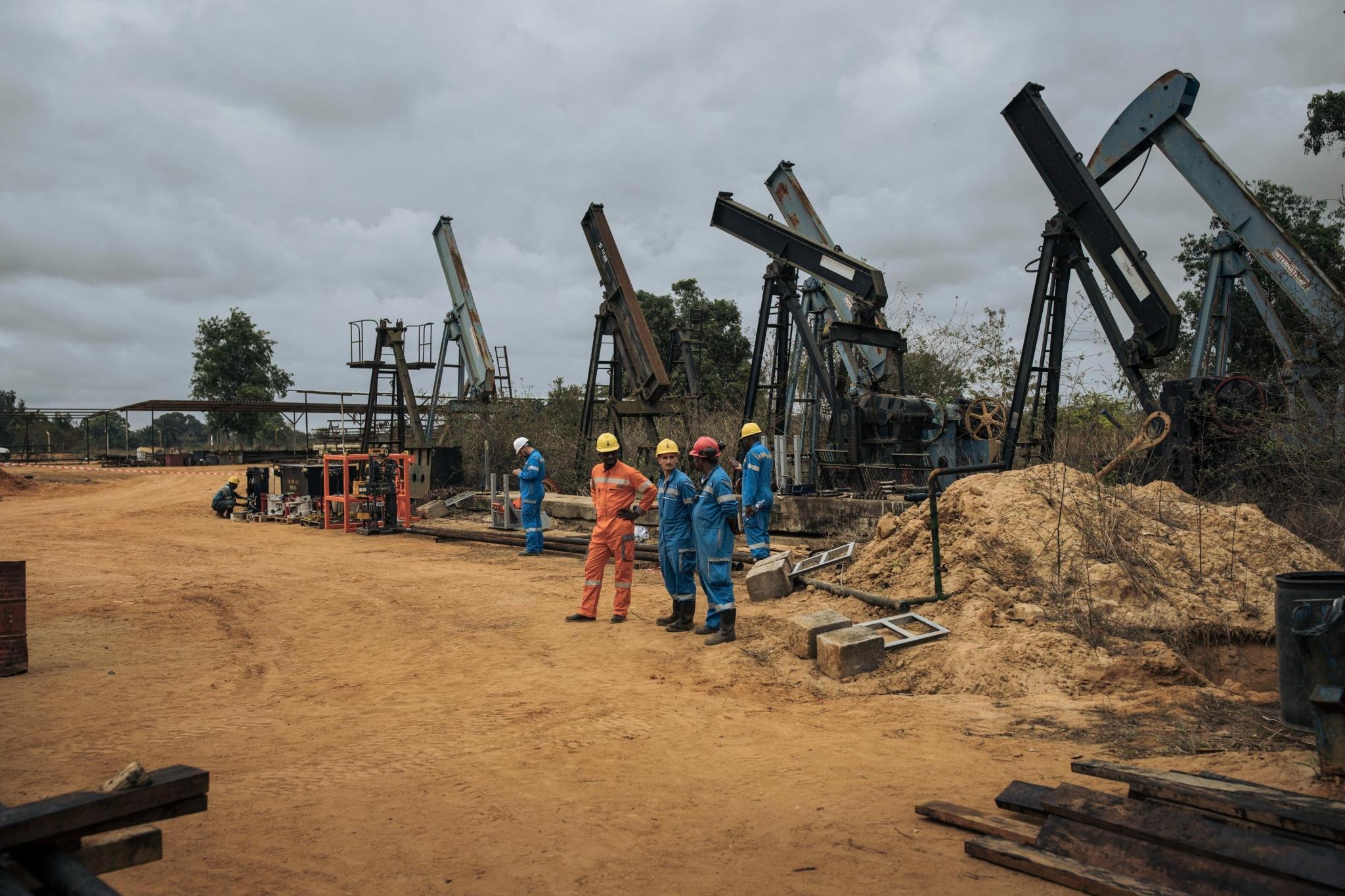
Meanwhile, the Anglo-French oil and gas company PERENCO, already active in Moanda (DRC), continues to extract oil under disastrous human and environmental conditions – without the free, prior, and informed consent of local communities. More recently, the Congolese government signed a new agreement with Trafigura Group, a multinational company already accused of large-scale pollution and human rights violations in several Global South countries.
How do you see the links between the ongoing violence in the DRC and extractivism – whether of fossil fuels, minerals, or labor?
The current violence in the DRC is closely linked to extractivism. You could even say that extractivism is the driving force behind the decades long armed conflict. Multinational corporations, with the complicity of neighboring countries, support armed groups in their bid to control Congolese natural resources. Furthermore, several bilateral agreements between the Congolese state and foreign powers, such as the sovereignty agreement with Belgium, hardly benefit the Congolese people. Instead, these agreements facilitate the takeover of our natural wealth by countries like Belgium and the United States, to the detriment of our development.
Our position on this dynamic remains steadfast – we say NO to this policy of masked destruction dressed as “development”. We reiterate our position against this project that threatens biodiversity, vital ecosystems, the rights of local communities and the planet’s climate future.
The cancellation of the DRC’s 2022 oil tender in late 2024 sent a clear message: the oil sector here is neither viable nor credible. With no serious bidders and widespread irregularities – from total opacity to ignored environmental and social assessments – the process collapsed under the weight of its own failures. This outcome reflects a broader truth: the Congolese oil sector cannot deliver sustainable development. It lacks transparency, accountability, and legitimacy in the eyes of the global energy industry.

Moanda, where oil has been extracted for nearly 50 years, is a stark example. Rather than improving lives, oil exploitation has deepened poverty, destroyed ecosystems, and fueled injustice. The harm there has triggered legal challenges and left a legacy of pollution, division, and disempowerment. Ignoring these realities, oil companies risk repeating – and amplifying – those harms, facing severe legal, financial, and reputational consequences in the process.
